

How to Build a Finance Function That Works Perfectly Even When You’re on Holiday
Many growing SMEs eventually reach a point where the finance function depends too heavily on the business owner.
The numbers still work.
But only because someone is constantly:
- checking
- adjusting
- reconciling
- explaining
- and manually connecting information together behind the scenes
That approach does not scale reliably.
A stronger finance function is not one that removes people entirely.
It is one where:
- reporting remains consistent
- forecasts continue behaving properly
- cash visibility remains clear
- and financial information stays usable
even when the owner is not directly managing every movement personally.
Key Takeaways
- Many SME finance functions become overly dependent on founder oversight
- Manual financial management creates operational friction as complexity increases
- Reliable financial systems reduce dependency on constant intervention
- Connected forecasting improves continuity and visibility
- 3-way forecasting helps financial information remain aligned over time
- Simpler, connected structures scale more reliably than heavier reporting layers
Why Founder-Led Finance Works at Smaller Scale
In the early stages of a business, finance is often highly owner-managed.
The founder usually understands:
- where cash is moving
- which customers matter most
- which costs are temporary
- what operational pressures are emerging
At smaller scale, much of the financial understanding lives inside the owner’s head.
That often works surprisingly well.
Because:
- transaction volume is lower
- operational complexity is manageable
- fewer systems are involved
The business can still function even if the financial structure is relatively informal.
What Changes as the Business Grows
As businesses scale, complexity increases faster than most financial processes evolve.
Gradually:
- forecasting becomes harder to maintain manually
- reporting requires more interpretation
- cash timing becomes less intuitive
- different spreadsheets begin evolving separately
- operational decisions affect multiple financial areas simultaneously
At this stage, the owner often becomes the layer holding the finance function together.
For example:
- manually adjusting forecasts
- explaining inconsistencies between reports
- translating operational activity into financial meaning
- reconciling information across systems
The finance function still operates.
But increasingly through intervention rather than structure.
Why This Creates Operational Risk
A finance function that depends heavily on manual interpretation eventually becomes difficult to scale consistently.
The issue is not capability. It is dependency.
Because when financial visibility relies on one person:
- reporting slows down
- forecasts become harder to maintain
- operational understanding becomes concentrated
- financial continuity weakens
This dependency becomes particularly visible when business owners try to step away operationally.
Research from Purbeck Insurance Services found that 76% of UK SME decision-makers either sometimes or always work while on holiday, reflecting how many businesses still rely heavily on founder involvement to keep operations moving consistently.
The issue is rarely commitment.
It is that too much operational and financial continuity still depends on one individual.
Why Better Systems Do Not Mean Heavier Systems
Many businesses respond to this by adding:
- more reports
- more spreadsheets
- more dashboards
- more approval layers
But heavier finance processes rarely improve reliability.
In many cases, they simply increase:
- duplication
- reconciliation work
- operational friction
A stronger approach is usually simpler.
One of the principles behind the Lotus ethos is: “Simplify, then add lightness.”
In practice, this means building financial systems that:
- remain connected
- require fewer manual corrections
- continue behaving consistently as complexity increases
Reliability usually comes from cleaner structure rather than additional layers.
How Connected Forecasting Reduces Founder Dependency
One of the biggest causes of financial friction in growing SMEs is disconnected information.
For example:
- profit forecasts updated separately from cash flow
- balance sheet movements reviewed retrospectively
- operational decisions analysed in isolation
This creates finance functions that require constant manual interpretation.
Connected 3-way forecasting helps reduce this dependency by linking:
- profit
- cash flow
- and balance sheet movements
into a single financial structure.
This allows the financial model to behave more like the business itself, rather than relying on manual interpretation to hold everything together.
| Founder-Dependent Finance Function | Connected Financial System |
| Forecasts require manual intervention | Forecasts extend from live financial behaviour |
| Reporting relies on owner interpretation | Financial information remains connected operationally |
| Cash issues appear reactively | Timing differences become visible earlier |
| Different reports evolve separately | Reporting structures stay aligned |
| Operational knowledge concentrated in one person | Financial visibility becomes repeatable and scalable |
| Finance function becomes difficult to step away from | Reporting remains usable without constant intervention |
The objective is not removing people from finance.
It is reducing unnecessary dependency on manual oversight.
Why Human Expertise Still Matters
Reliable financial systems are not created through automation alone.
As businesses scale:
- timing differences increase
- operational complexity expands
- forecasting assumptions become more interconnected
Software improves efficiency.
But understanding whether the financial information continues behaving properly still requires:
- interpretation
- judgement
- operational financial understanding
This is where experienced financial expertise becomes critical.
The future of SME finance is not automation replacing people.
It is expertise embedded into connected systems.
What a Reliable Finance Function Actually Looks Like
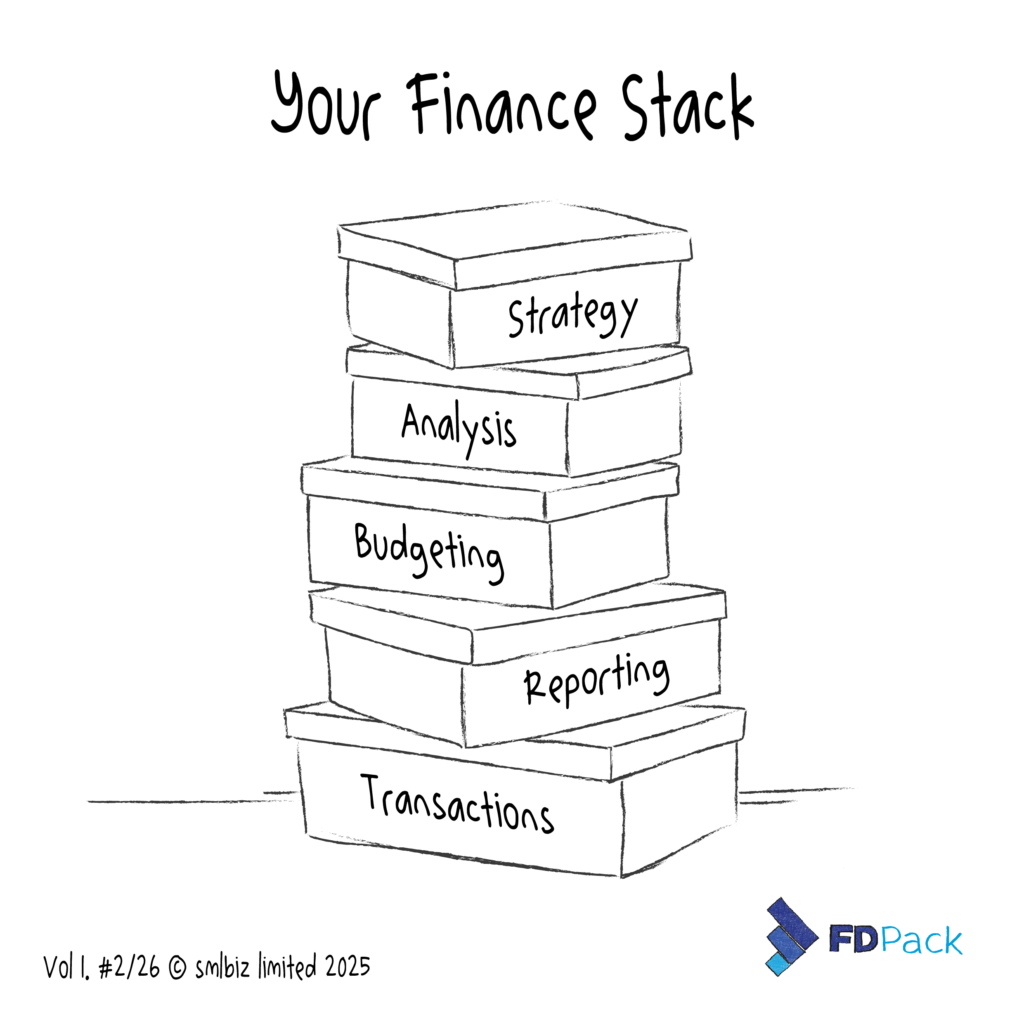
A reliable finance function is usually quieter than businesses expect.
It provides:
- management accounts that remain consistent over time
- forecasting connected directly to actual performance
- visibility over cash timing and operational pressure points
- financial information that continues making sense as complexity increases
This allows business owners to:
- make decisions more confidently
- step away operationally when needed
- reduce financial firefighting
- focus on running the business rather than constantly reconciling the numbers
A finance function scales properly when the numbers continue behaving consistently without constant manual intervention.
Why This Matters as SMEs Scale
As SMEs grow:
- decisions become larger
- operational pressure increases
- forecasting becomes more important
- financial inconsistencies become more expensive
At this stage, founder-managed finance often stops scaling effectively.
Research from InsureandGo found that 14% of SME owners believe there is nobody capable of managing the business in their absence, highlighting how operational and financial dependency often remains concentrated around the founder.
Businesses increasingly need:
- connected financial systems
- forecasting aligned with actual performance
- operational visibility that does not rely on one individual interpreting everything manually
This is often the point where financial structure becomes more valuable than additional reporting.
A Scalable Finance Function Should Not Depend on Constant Intervention
As businesses scale, finance functions often become increasingly dependent on founder oversight behind the scenes.
That dependency usually appears through:
- forecasts requiring manual adjustments
- reporting that needs constant explanation
- financial visibility that relies on one person interpreting the numbers
Over time, this creates operational friction that becomes difficult to scale reliably.
FDPack helps growing SMEs build connected reporting and forecasting structures that remain reliable as complexity increases, reducing dependency on constant manual intervention while improving confidence in the numbers behind operational decisions.
This helps ensure the numbers remain decision-ready as the business grows.
Because a scalable finance function is not about producing more reporting.
It is about creating financial information that continues working properly even when the owner steps away.
FAQs
Why do finance functions become harder to manage as SMEs grow?
Because operational complexity often increases faster than financial systems and reporting structures evolve.
What causes founder dependency in SME finance?
Manual forecasting, disconnected reporting, and operational knowledge concentrated in one person often create dependency on constant oversight.
How does connected forecasting improve financial reliability?
It links profit, cash flow, and balance sheet movements together so financial behaviour remains aligned across the business.
Why do manual finance processes stop scaling effectively?
Because they become harder to maintain consistently as transaction volume, reporting complexity, and operational pressure increase.
What makes a finance function scalable?
Consistent reporting, connected forecasting, and financial information that remains reliable without constant manual intervention.

