

Dividend Anxiety: How to Reward Shareholders Without Creating Cash Flow Pressure
A dividend should be a reward for building a successful business. Yet many business owners hesitate before taking one.
Not because the business is unprofitable, but because they are unsure what happens next.
The question is rarely: Can we pay a dividend?
The more important question is: What happens to cash after we pay a dividend?
Because dividends are paid from cash, not profit.
And that distinction matters more than many business owners realise.
Key Takeaways
- Profit does not automatically mean a dividend is affordable
- Cash flow and working capital often determine dividend capacity
- Timing matters as much as profitability
- Growth can increase financial pressure even when profits are strong
- Forecasting improves visibility before cash constraints emerge
- 3-way forecasting helps assess the wider impact of dividend decisions
Why Dividend Decisions Create Uncertainty
Most business owners do not struggle with the concept of paying dividends.
They struggle with confidence.
The concern is usually not whether the company has generated sufficient profit.
It is whether taking money out today creates pressure somewhere else tomorrow.
For example:
- upcoming VAT liabilities
- payroll growth
- investment plans
- slower customer payments
- seasonal fluctuations in cash flow
None of these issues may appear significant in isolation.
The challenge is understanding how they interact once cash leaves the business.
Why Profit Doesn’t Tell the Whole Story
Profit is important. But profit is not cash.
A business can report strong profits while simultaneously experiencing pressure on liquidity.
For example:
- revenue may have been recognised but not collected
- working capital may be increasing
- customers may be paying more slowly
- growth may require additional investment
This disconnect is more common than many owners realise.
Research from Airwallex found that 22% of UK SMEs identify cash flow as their biggest business challenge. That highlights an important reality: generating profit and maintaining cash availability are not always the same thing.
From an accounting perspective, performance may appear strong.
From a cash perspective, the picture can look very different.
This is why dividend decisions based solely on profit often create uncertainty.
The business may be profitable. That does not automatically mean the cash can leave the business without consequences.
Why Timing Usually Matters More Than the Dividend Itself
Many dividend-related problems are not caused by the dividend itself.
They are caused by timing.
A payment that feels comfortable today can become uncomfortable when combined with:
- future payroll commitments
- tax liabilities
- slower cash collection
- increasing working capital requirements
The issue is rarely the transaction itself.
It is understanding what happens next.
This is why two businesses with identical profits can experience very different outcomes after paying the same dividend.
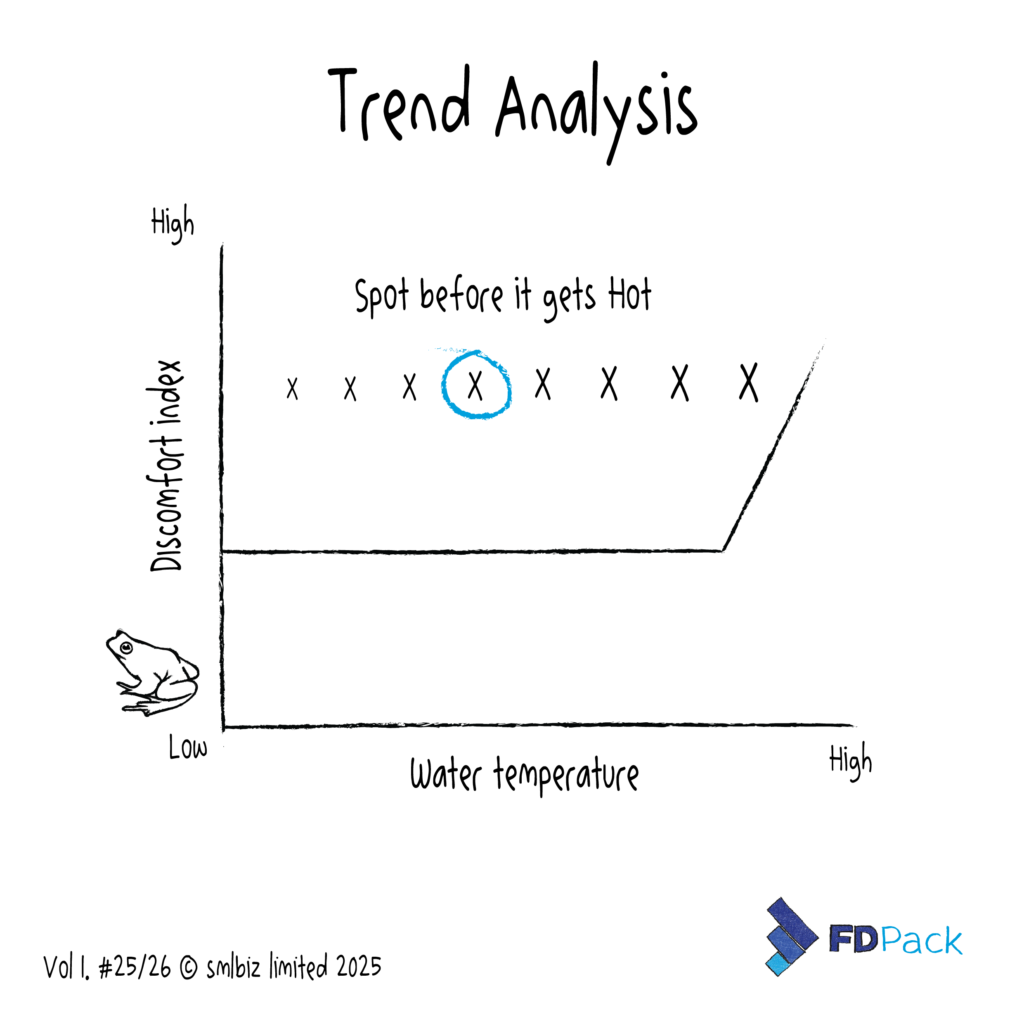
How the Same Dividend Can Produce Different Outcomes
The difference often comes down to visibility.
| Limited Visibility | Connected Financial Visibility |
| Dividend assessed using profit alone | Dividend assessed using profit, cash, and future obligations |
| Cash reviewed separately | Cash implications understood before payment |
| Working capital considered later | Working capital included in planning |
| Pressure appears reactively | Pressure becomes visible earlier |
| Decisions rely on current balances | Decisions consider future financial movements |
The dividend itself may be identical. The outcome may not.
The difference is understanding how the business absorbs the payment.
Why Growth Changes the Equation
As businesses grow, dividend decisions become more complex.
Growth often increases:
- working capital requirements
- hiring commitments
- operational costs
- investment needs
This means a business can become more profitable while simultaneously becoming more cash hungry.
This is one reason dividend decisions become more difficult as businesses scale.
Why Forecasting Matters Before Taking Money Out
Dividend planning is fundamentally a forecasting exercise.
The question is not: Can we afford this dividend today?
It is: Can we still operate comfortably after paying it?
That requires visibility over:
- future cash flow
- upcoming obligations
- working capital movements
- planned investment
Without forecasting, dividend decisions become backward-looking.
They rely on historical performance rather than future financial behaviour.
The importance of forward visibility is reflected more broadly across SME decision-making.
Research from the British Business Bank found that 46% of SMEs seek external finance only a week before they need it, or after the need has already arisen.
That suggests many financial decisions are still being made reactively rather than with sufficient visibility over future cash requirements.
Dividend planning is no different. The strongest decisions are made before pressure appears.
How 3-Way Forecasting Improves Dividend Decisions
One of the most common weaknesses in dividend planning is reviewing profit in isolation.
Businesses often focus on:
- profit
- retained earnings
- current cash balances
while future financial movements are considered separately.
Connected 3-way forecasting links:
- Profit & Loss
- Cash Flow
- Balance Sheet
into one financial model.
This allows business owners to see:
- how a dividend affects liquidity
- how working capital changes over time
- whether growth plans remain funded
- how future obligations affect cash availability
A dividend should not be assessed as a standalone transaction.
It should be assessed within the wider financial behaviour of the business.
Because a forecast is only useful if it behaves like the business itself.
What Comfortable Dividend Planning Looks Like
The strongest dividend decisions are usually the least dramatic.
They are supported by:
- reliable management accounts
- visibility over cash flow
- understanding of working capital
- forecasting connected directly to actual performance
The result is not simply a dividend. It is confidence that the business remains financially comfortable after the payment has been made.
Reward Shareholders Without Creating Pressure Elsewhere
A dividend should reward shareholders. It should not create uncertainty about future cash flow. The strongest dividend decisions are rarely driven by profit alone.
They are supported by an understanding of:
- cash timing
- working capital
- future obligations
- financial flexibility
FDPack helps growing businesses build connected reporting and forecasting structures that improve visibility over how financial decisions affect the wider business.
Because the goal is not simply taking money out. It is doing so without creating pressure on future growth.
FAQs
Can a profitable business still struggle after paying a dividend?
Yes. Profit and cash flow do not always move together. A business may report strong profits while cash remains tied up in working capital.
Should dividends be based on profit or cash?
Both matter. Profit determines distributable reserves, while cash determines whether the business can comfortably absorb the payment.
Why does working capital affect dividend decisions?
Because cash tied up in debtors, inventory, or operational requirements is not immediately available for distribution.
How does forecasting improve dividend planning?
Forecasting provides visibility over future cash movements, obligations, and working capital requirements before a dividend is paid.
Why is 3-way forecasting useful for dividend decisions?
It connects profit, cash flow, and balance sheet movements, providing a more complete view of the dividend’s impact on the business.

