

Why the Finance Function That Got You to £2M Won’t Get You to £10M
Most business owners think the hard part is getting to £2M.
In reality, that’s often where a different challenge begins. At £2M, you can still see most of what’s happening.
- You know where revenue is coming from.
- You know which customers matter.
- You can usually spot a problem before it shows up in a report.
By £10M, that becomes much harder. There are more customers.
- More people.
- More projects.
- More decisions.
- More moving parts.
The business has grown. But the finance function often hasn’t changed at the same pace.
Key Takeaways
- Growth often creates complexity faster than clarity
- The finance processes that worked at £2M rarely work unchanged at £10M
- More data doesn’t automatically create better decisions
- Founder instinct becomes harder to scale
- Financial friction builds slowly before it becomes noticeable
- 3-way forecasting helps growing businesses see pressure before it arrives
Why Does Running a £5-£10M Business Feel Different from Running a £2M Business?
At £2M revenue, the business is still relatively visible.
The owner is close to customers, operations, and financial performance.
Most questions can be answered quickly because the information sits close to the people making decisions.
As the business grows, that starts to change.
- More customers.
- More staff.
- More systems.
- More decisions are being taken every day.
The distance between what is happening and what the owner can see begins to grow.
At the same time, decisions become more connected.
- A hiring decision affects profit.
- Profit affects cash.
- Cash affects investment plans.
- Everything starts influencing everything else.
The challenge is not growth. The challenge is staying on top of what growth creates.
Where Does Financial Friction Start Appearing?
Most finance functions do not suddenly stop working, but inefficiencies begin to develop.
- Reports take longer.
- Spreadsheets start appearing everywhere.
- Different teams work from slightly different assumptions.
- Questions that used to take five minutes suddenly take half a day.
Nothing feels broken. But everything takes a little more effort.
This is usually where owners start feeling that the business is becoming harder to manage.
- The revenue looks better.
- The team is bigger.
- But getting a clear answer becomes more difficult.
That is financial friction. And it usually appears long before anyone calls it a finance problem.
Why Doesn’t More Data Create Better Decisions?
One of the biggest myths in growing businesses is that more information automatically creates more clarity.
It doesn’t.
As businesses scale, they usually create:
- more reports
- more dashboards
- more spreadsheets
- more metrics
Yet decision-making often becomes harder.
Research from the UK Government’s Business Data Use and Productivity Study found that only 46% of businesses handling digital data agreed that data analysis supports business decision-making.
The problem is rarely a lack of information. The problem is working out what matters.
If the numbers create more questions than answers, the reporting has become part of the problem.
More reporting is only useful if it makes decisions easier.
When Do Founder Instinct and Spreadsheets Stop Being Enough?
Founder instinct is one of the reasons many businesses get to £2M in the first place.
- It helps owners move quickly.
- It helps them spot problems early.
- It helps them make decisions before everybody else sees the opportunity.
But instinct becomes harder to scale.
As businesses grow, fewer decisions can be made through direct observation.
At the same time, spreadsheets start multiplying.
Each one solves a problem. Then another appears. Then another.
Eventually:
- assumptions exist in multiple places
- reports stop matching perfectly
- forecasts become harder to update
- confidence starts slipping
Research from American Express UK found that 28% of SME leaders say they are too caught up in day-to-day operations to focus on growth.
That is often what financial friction looks like.
The business has become more complicated. The finance processes haven’t evolved at the same pace.
What Does a Finance Function Built for Growth Look Like?
A stronger finance function is not necessarily a bigger one.
The goal is not more reporting. The goal is to make decisions easier.
| At £2M Revenue | At £10M Revenue |
| The founder sees most activity directly | Information flows through people and systems |
| Reporting explains what happened | Reporting helps shape what happens next |
| Spreadsheets remain manageable | Consistency becomes more important |
| Cash issues are usually visible quickly | Cash timing becomes harder to spot |
| Decisions happen largely through instinct | Decisions need clearer financial visibility |
Many businesses respond to growth by adding more.
- More reports.
- More dashboards.
- More spreadsheets.
More layers between the numbers and the decisions they are meant to support.
The problem is that every addition carries a cost, i.e., more maintenance, more reconciliation, more interpretation and more opportunities for things to drift apart.
The strongest finance functions often take the opposite approach.
- They remove what no longer adds value.
- They focus on the information that genuinely helps the business move forward.
The strongest finance functions are rarely the busiest. They are the ones carrying the least unnecessary weight.
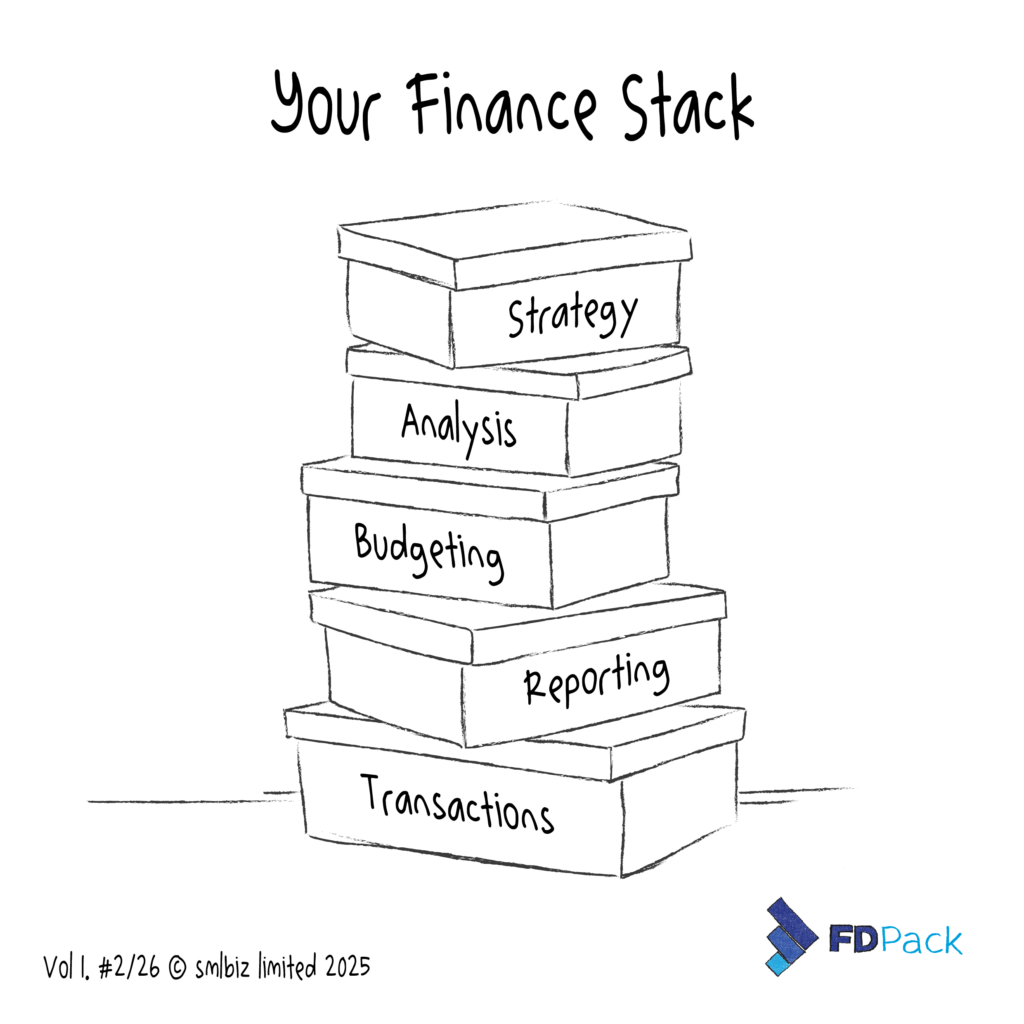
How Do Growing Businesses Maintain Visibility as Complexity Increases?
As businesses grow, the numbers become more connected.
- A hiring decision affects profit.
- Profit affects cash.
- Cash affects the balance sheet.
The problem is that many businesses still review those things separately.
- The profit and loss gets reviewed.
- Cash gets discussed later.
- The balance sheet gets looked at occasionally.
- But the business itself does not behave in separate pieces.
Everything is connected.
That is why three-way forecasting becomes increasingly important as businesses move from £2M towards £10M.
Rather than looking at profit, cash flow, and the balance sheet independently, three-way forecasting connects them into a single view of how the business is likely to behave.
It helps answer practical questions such as:
- Can we afford this hire?
- What happens if revenue grows more slowly than expected?
- How will this investment affect cash?
- Where does working capital start creating pressure?
This is one of the reasons FDPack places so much emphasis on connected three-way forecasting.
As businesses grow, the challenge is rarely a lack of information.
It is understanding how profit, cash flow, and balance sheet movements interact before decisions are made.
A connected forecast removes much of the manual interpretation that builds up as businesses scale.
Rather than adding another reporting layer, it creates a clearer view of how the business is likely to behave.
The objective is not to predict the future perfectly. The objective is to see pressure building before it becomes a problem.
The result is faster decisions, fewer surprises, and less financial friction.
Growth Requires Better Visibility, Not More Complexity
Many businesses respond to growth by adding:
- more reports
- more spreadsheets
- more dashboards
- more processes
But more complexity does not automatically create better decisions.
As businesses grow, financial systems often become heavier than they need to be.
- New reports are added.
- Additional spreadsheets appear.
- Workarounds become permanent.
Over time, the finance function starts carrying more weight without necessarily becoming more useful.
- The businesses that scale most effectively tend to challenge that weight continuously.
- They focus on the information that genuinely drives decisions.
- They remove the friction that slows them down.
FDPack helps growing businesses create that clarity through structured management reporting and connected three-way forecasting.
Because the finance function that gets a business to £2M often becomes too heavy by the time it reaches £10M.
Growth always adds complexity.
The mistake is allowing that complexity to create drag.
Growth requires more capability.
It does not require more complexity.
FAQs
Why do businesses outgrow their finance function?
Because operational complexity usually grows faster than reporting, forecasting, and financial visibility.
Why does growth make businesses harder to manage?
As businesses scale, information becomes spread across more people, systems, customers, and decisions, making it harder to maintain direct visibility.
When do spreadsheets become a problem?
Usually, when assumptions, forecasts, and reports start living in different places and require increasing manual updates.
What should a finance function do as a business grows?
It should help owners make decisions faster and with more confidence, not simply produce more reports.
Why is three-way forecasting important for growing businesses?
Because it connects profit, cash flow, and balance sheet movements into one view, helping owners understand the financial impact of decisions before pressure appears

